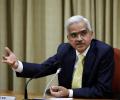
RBI Governor Shaktikanta Das on Wednesday defended the Reserve Bank's handling of the price situation, saying acting prematurely on inflation would have exerted a heavy cost on the economy and citizens. Acknowledging that the inflation target has been missed, Das said the RBI decided to support the economy by not introducing a rate hike in face of a spike in inflation. "We prevented a 'complete collapse of the economy' by keeping rates lower and stayed away from premature tightening," Das said speaking at the annual FIBAC conference of bankers in Mumbai.

RBI said more monetary transmission to support growth continues to be critical.

According to the financial services major, the recent decline in inflation, driven largely by food prices, gives the RBI room to pause monetary tightening.

The central bank is reviewing its monetary policy on April 20 and is widely expected to further hike its key rates and/or ratio to rein in rising inflation.

Other bankers who attended the meeting at Mint Street included SBI chairman-cum-managing director O P Bhatt, ICICI chief executive and MD Chanda Kochhar, Standard Chartered's India head Neeraj Swaroop and HDFC Bank MD Aditya Puri, among others.

Union Finance Minister Nirmala Sitharaman on Monday said people are finding current interest rates "very stressful" and urged banks to make them affordable. Speaking at an event organised by State Bank of India, the finance minister said that at present, India requires industry to ramp up and invest in new facilities, and added that lowering lending rates can help achieve the "Viksit Bharat" aspiration.

The Reserve Bank of India's (RBI's) interest rate decision, West Asia conflict and trading activity of foreign investors are the key factors that will dictate investors' sentiment in the market this week, analysts said. Moreover, quarterly earnings from IT bellwether TCS, domestic macroeconomic data and movement in global oil benchmark Brent crude would also guide trends in the market. Worsening tensions in the Middle East and foreign fund outflows were the major culprits behind the equity markets sharp fall last week.

The monetary authority said it was worried on three fronts with regard to inflation as well as the economy.

The spike in food prices at the onset of the monsoon season has corroborated the Reserve Bank of India's (RBI's) view that the fight against inflation is far from over, the State of the Economy report of the central bank said. At the same time, the report said that the country is poised to become the fastest-growing major economy in the world, notwithstanding some sequential moderation in economic activity in June. Consumer Price Index (CPI)-based inflation rate increased to 4.8 per cent in June 2023, from 4.3 per cent in May, primarily on account of an increase in food inflation.

The Reserve Bank is likely to maintain status-quo on the key interest rates for the third time in a row in its upcoming bi-monthly policy review despite the US Federal Reserve and the European Central Bank hiking benchmark rates, as domestic inflation is within the RBI's comfort zone, say experts. The borrowing cost which started rising in May last year has stabilised with RBI keeping the repo rate unchanged at 6.5 per cent since February when it was raised from 6.25 per cent. In the previous two bi-monthly policy reviews in April and June the benchmark rate was retained.

Vegetable rates may ease from September, led by tomato prices, which have started showing signs of correction on the back of increased supply, Reserve Bank of India (RBI) Governor Shaktikanta Das said on Wednesday. "Looking ahead, the spike in vegetable prices in July is starting to see a correction, led by tomato prices. "New arrivals of tomatoes in mandis are already softening the prices, coupled with proactive supply management in the case of onions.
.jpg)
Food and fuel inflation in India have remained high for several years, the paper said, adding to durably reduce the current high inflation, the monetary policy stance needs to remain tight for a considerable length of time.

The RBI's mistake may have been in interpreting its mandate to maintain retail inflation at 4%, with 2% leeway in either direction, as being a mandate that permitted it to do nothing even when inflation was at or near the upper bound of 6%, observes T N Ninan.

Less-than-expected rainfall and a poor spatial distribution, experts say, can rekindle fears of a rise in food and fuel inflation that can have an impact on the RBI's monetary policy. The fear of less than optimal rainfall due to El Nino this year, analysts believe, is the biggest short-term risk for the markets, which they said has not been fully priced in yet by them. Monsoon set over Kerala on June 08, a week later than its scheduled date.

Central bank estimate economy to grow at 5.5 per cent.

Wholesale price inflation eased to 2.05 per cent in March, as against 2.38 per cent in February, government data showed on Tuesday. The wholesale price index (WPI) based inflation, however, rose year-on-year.

Analysts at Bank of America Merill Lynch said that fears of inflation getting "generalised" are overdone, as only two sub-categories of fuel and light and housing (accounting for 22 per cent of the basket) have seen a price-rise above the headline 5.2 per cent.
Attainment of growth and price stability through isolated measures by RBI may not be the most effective way

India's consumer price index (CPI)-based retail inflation rate is likely to have cooled further in June, thus remaining below the 4 per cent target of the Reserve Bank of India (RBI) for a fifth consecutive month, giving the central bank wiggle room to focus on growth. Economists reckon that the decline is on account of easing prices in various categories of goods, especially food items, and a favourable base effect.

Policy with regard to the foreign banks is part of his five pillars of reforms, says RBI Governor.
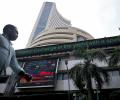
RBI policy, macro data, company earnings to decide market course this week: Experts

Coal India topped the losers' list in the Sensex pack on Tuesday, falling 2.36 per cent, followed by Bharti Airtel at 2.16 per cent.
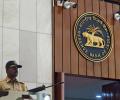
Describing the recent two consecutive spikes in retail inflation beyond the 6 per cent as a 'transitory hump', a Wall Street brokerage on Monday said it expects the RBI to overlook it and unanimously stick to the dovish stance at the forthcoming policy review, even though a further upward revision of its already-revised inflation target is more likely. The Reserve Bank-led monetary policy panel is scheduled to announce the third monetary policy review on August 6, amidst the continuing spike in retail inflation that has breached the 6 per cent upper tolerance level for the past two consecutive months.
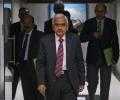
With the 115 bps reduction in repo rate beginning February, banks have already transmitted 72 bps to the customers on fresh loans and some large banks have transmitted as much as 85 basis points.

Auto stocks will be in focus

Subbarao's remarks come against the backdrop of Finance Minister P Chidambaram's assertions in recent weeks that RBI should not focus solely on containing inflation but also look at the larger mandate of growth and job creation.

This is contrary to the expectations of a majority of analysts predicting for another hike given the rise in inflation lately, including domestic ratings agency Icra
The Reserve Bank of India is unlikely to change the policy rates the repo and reverse repo rates in its mid-term review of the monetary policy amid persistent inflationary expectations following copious foreign capital inflows. Headline inflation has dropped significantly below RBI's target of 5 per cent for 2007-08 but this is a result of the government deciding not to pass on the increase in oil prices to consumers.

Nudging the RBI to cut interest rates to boost growth, Finance Minister Arun Jaitley on Sunday said he had already made his mind clear and hoped the central bank will take decision after taking into account various factors.
The Monetary Policy Committee (MPC) may go for a hike of up to 0.25 per cent in the reverse repo rate at which the RBI absorbs excess liquidity and leave the repo rate at which it lends, to narrow the policy rate corridor, a British brokerage said on Thursday. "Growth concerns amid spread of the Omicron variant and relatively benign inflation out-turns provide the RBI with enough room to maintain its growth-supportive monetary policies," analysts at Barclays said, ahead of the resolution announcement next week. The RBI will hike the reverse repo rate by 0.20-0.25 per cent, given its liquidity management actions, it said.

The RBI's policy decision would be the major event driving trading sentiment in the equity market this week, while global cues, foreign funds movement and crude oil prices will be the other key factors to watch out for, analysts said. Markets have been witnessing a rebound recently. However, the move lacks decisiveness amid lingering challenges like global policy tightening due to soaring inflation and geopolitical tensions, they added. "RBI policy, global macro numbers and crude oil prices will set the trend for this week.
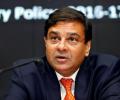
Demonetisation to result in short-run disruptions in cash-intensive sectors like retail, hotels, restaurants and transportation, RBI said while announcing the Monetary Policy
.jpg)
Raghuram Rajan, who took over as RBI Governor on September 4, is scheduled to unveil on Friday mid-quarter monetary policy review, an event keenly awaited by industry and banks.
Das said that global economic activity has remained fragile and the surge in COVID-19 cases has subdued early signs of revival.


Finance Minister Nirmala Sitharaman on Thursday said inflation management cannot be "singularly" left to the monetary policy as a majority of activities are outside its purview in the current context. Speaking at a seminar organised by economic think-tank Icrier, the finance minister said that both the fiscal policy and the monetary policy have to work together to contain inflation. Consumer price index (CPI) based inflation or retail inflation is ruling above the Reserve Bank's comfort level of 6 per cent since January.

Wholesale inflation rate declined marginally to 0.2 per cent in February compared to 0.27 per cent in the preceding month despite a slight uptick in the food basket. The Wholesale Price Index (WPI)-based inflation was in the negative zone from April to October and had turned positive in November at 0.26 per cent. The inflation in February 2023 was 3.85 per cent.

Investor wealth eroded by Rs 4.46 lakh crore in a single day on Friday with the benchmark BSE Sensex tanking more than 1 per cent in line with global stocks rout. The 30-share BSE Sensex plunged 885.60 points or 1.08 per cent to close at 80,981.95 with 25 of its components declining and five ending with gains. During the day, it nosedived 998.64 points or 1.21 per cent to hit an intra-day low of 80,868.91.
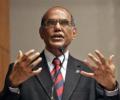
Is unhappy about banks' reluctance to pass on lower interest rates.

After two surprising, successive rate cuts in January and February 2015, RBI governor Raghuram Rajan decided not to reduce them further in his first policy announcement in the new financial year. Is he playing spoilsport for consumers of homes and cars?
